The Problem
University campuses require rapid access to emergency medical and mental health first response services. EMS response times can be delayed when responding at a campus environment, which can be fatal in cardiac arrest, anaphylactic shock, or severe trauma. Additionally, common campus medical concerns, such as athletic injuries, mental health crises, and alcohol intoxication, require trained medical attention but do not always warrant emergency hospitalization. Without an on-scene first response option, these cases default to 911 calls, placing unnecessary burden on Hamilton EMS and the hospital system.
The Solution
McMaster's Emergency First Response Team (EFRT), established in 1982, operates 24/7 as a confidential, student-run service providing emergency first aid and mental health support to anyone on campus. With an average response time of 2–3 minutes, EFRT treats appropriate cases on-scene, reducing unnecessary 911 calls and keeping lower-acuity patients out of the hospital system.
As a trained Emergency Medical Responder, I contributed over 1,300 volunteer hours across shifts, monthly trainings, and skill evaluations. As 2023–2024 NCEMSF Conference Coordinator, I managed a $10,000 budget and organized team travel and accommodations to Baltimore, MD, representing McMaster at the National Collegiate EMS Foundation conference.
Photo Library
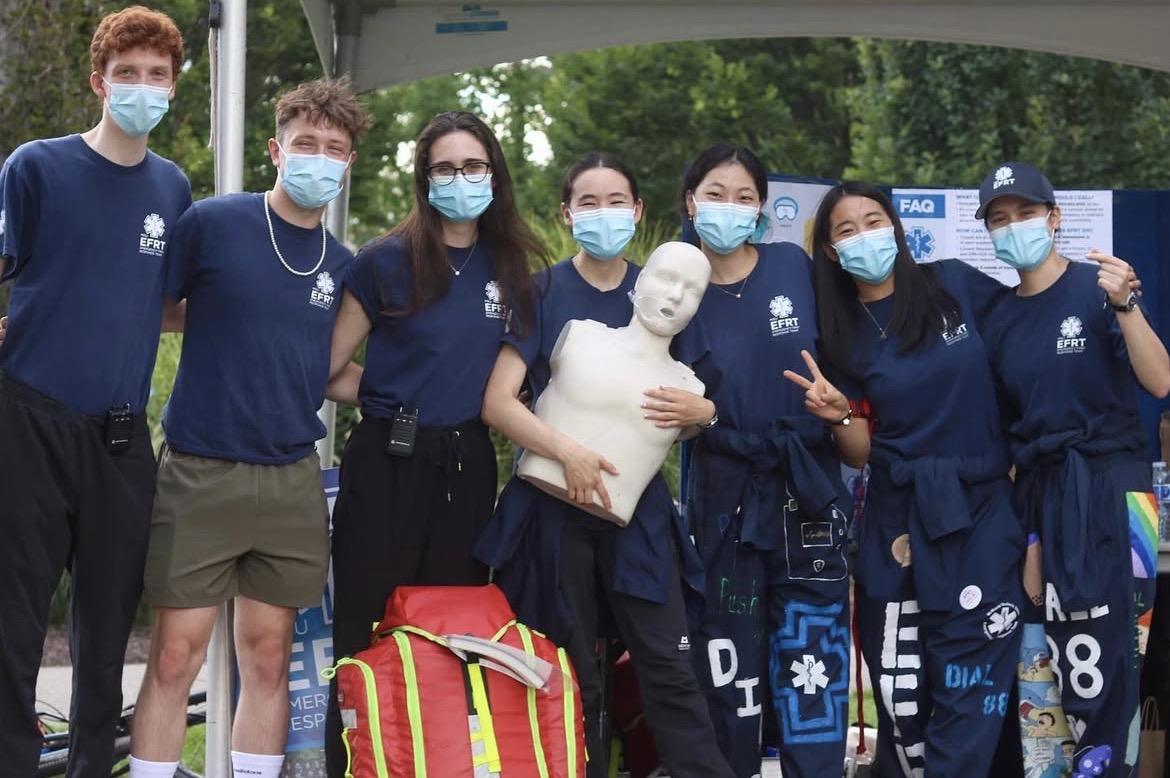
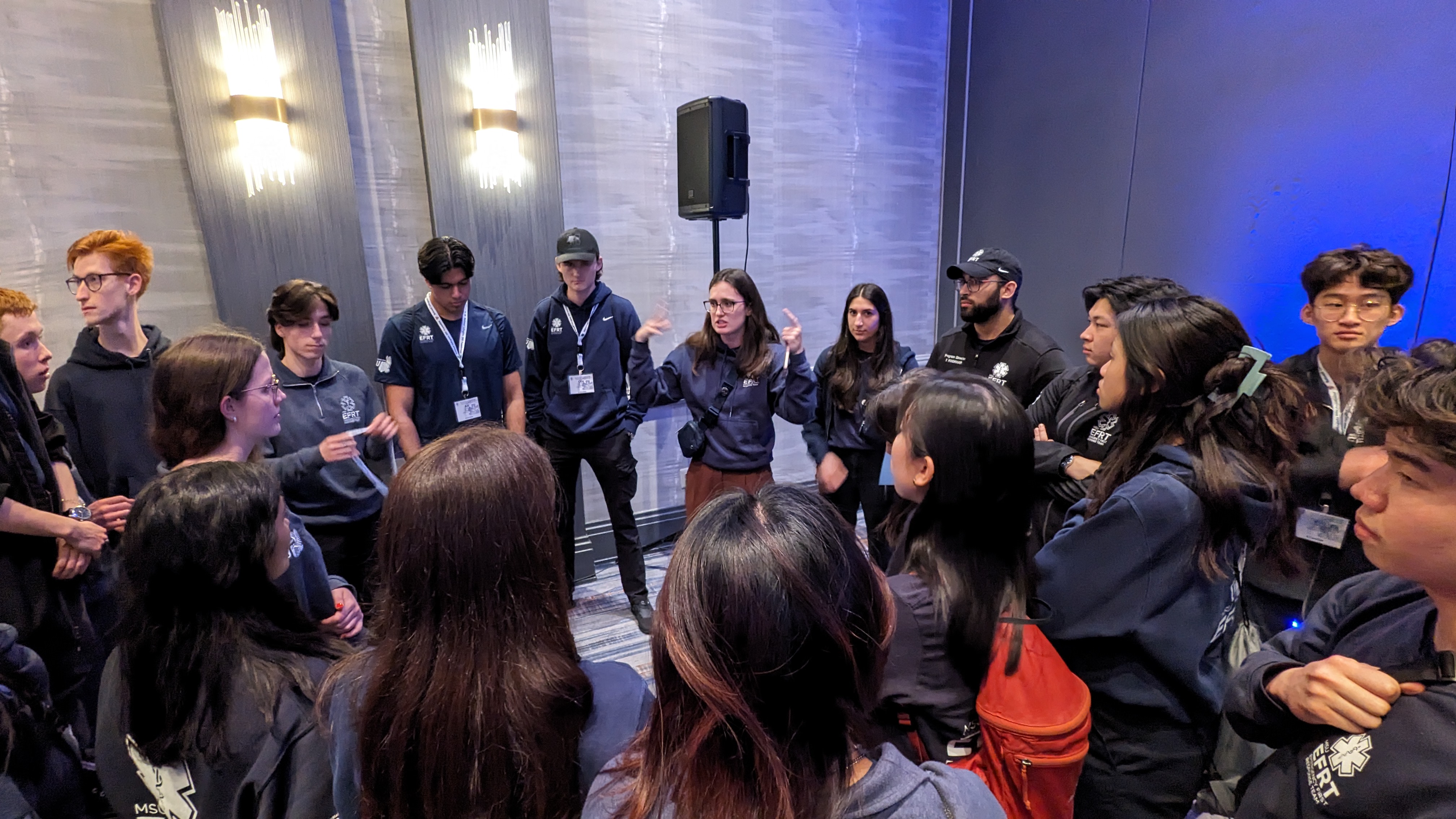
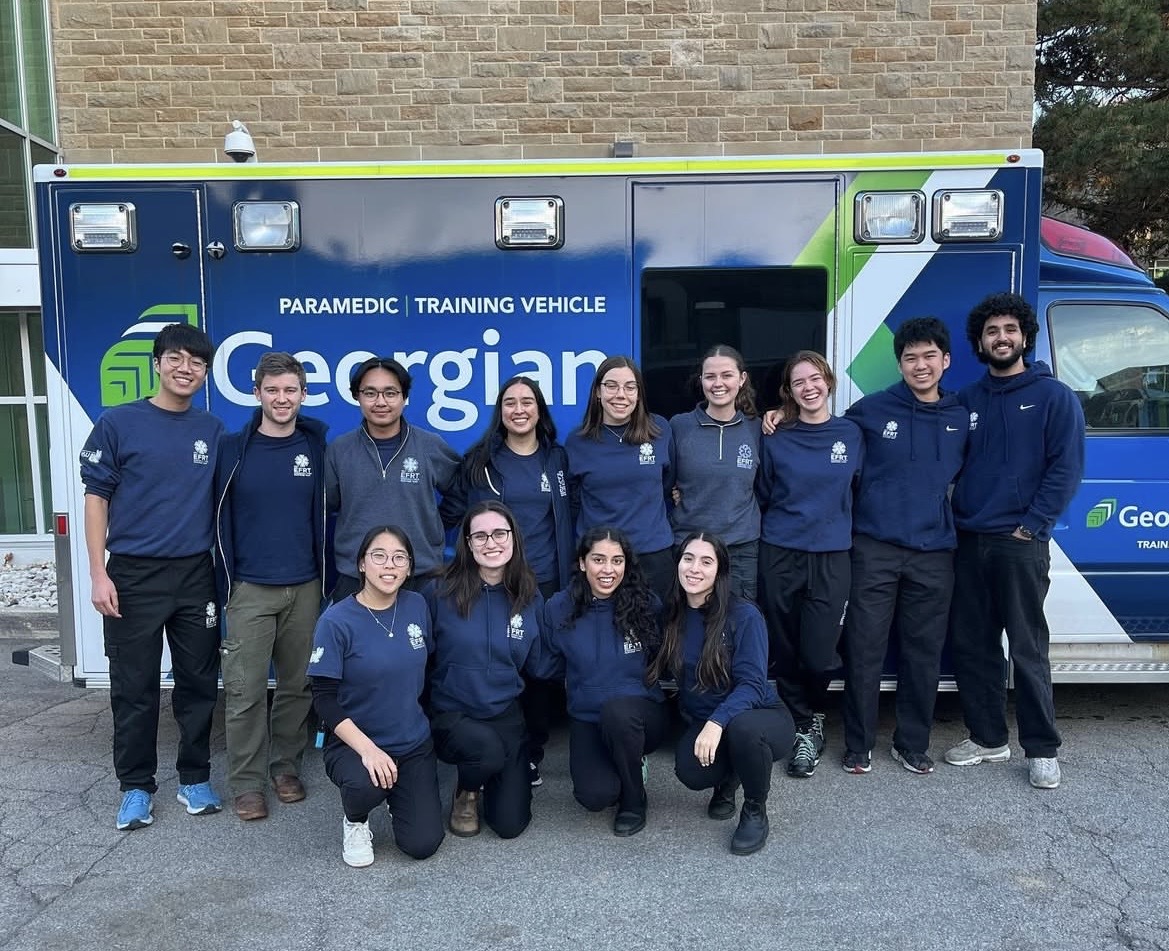
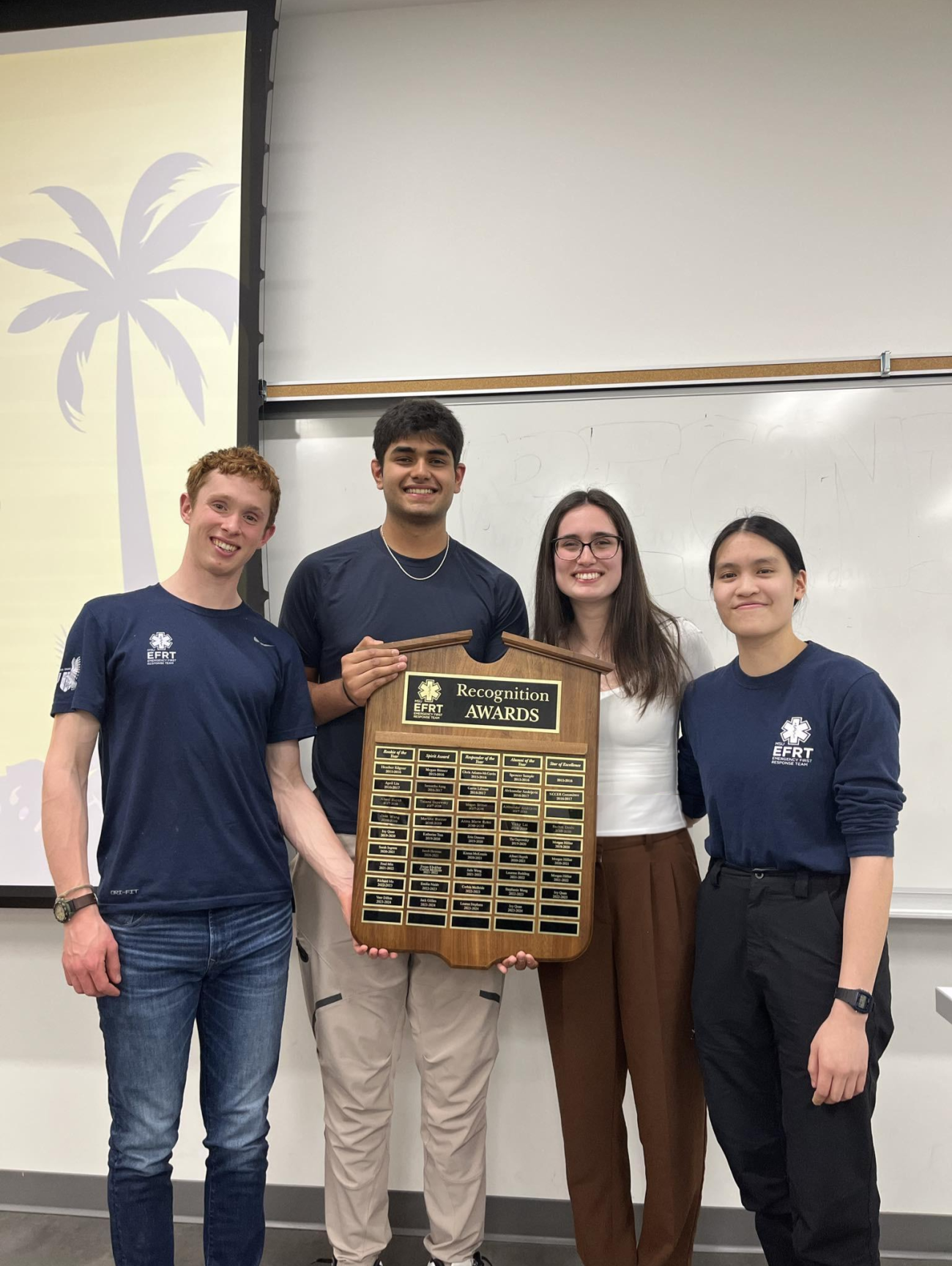
Photos showing contributions to the team • Click to view all 7 images
Key Contributions
- Training and Skill Maintenance
- Participated in monthly team trainings and skill evaluations to maintain certification standards and clinical readiness. EFRT's training program covers a broad scope of practice including airway management, trauma assessment, medication administration, and mental health response. I'm certified in Emergency Medical Responder (EMR), First Responder (FR), Prehospital Trauma Life Support (PHTLS), Basic Life Support (BLS), and Applied Suicide Intervention Skills Training (ASIST). Keeping skills sharp in a volunteer context alongside full-time academics required consistent time management and an eagerness to learn new skills.
- NCEMSF Conference Coordination
- Served as Conference Coordinator for EFRT's 2023–2024 attendance at the National Collegiate Emergency Medical Services Foundation (NCEMSF) Conference in Baltimore, MD. Managed a $10,000 budget covering registration, transportation, and accommodations for the team. Flying was not a viable option for the group, requiring the coordination of chartered bus transport from Hamilton to Baltimore, which was a logistically complex arrangement involving scheduling, vendor negotiation, and contingency planning.
- 2024 Responder of the Year
- Awarded Responder of the Year by EFRT's executive team in 2024, recognizing outstanding performance across leadership, clinical responding skills, and dedication to the team. The award is selected from the full roster of active responders, making it a recognition of the quality and character of contributions to the team.
Skills Applied
Key Learnings
Sustained Commitment
Volunteering over 1,300 hours while completing an undergraduate degree demonstrated the ability to manage competing long-term commitments without letting either suffer. I showed up reliably for on-call shifts, inlcuding weekends and nights, which reflects a strong work ethic.
Performing Under Pressure
Responding to emergencies developed my ability to stay calm, prioritize quickly, and act decisively in high-stakes situations. Clinical calls rarely go exactly as trained, so adaptability to changing conditions and composure under uncertainty became skills I continuously refined throughout my time with EFRT.
Teamwork and Communication
Effective emergency response depends entirely on clear communication and trust between the team. Every call required coordinated handoffs, concise patient reporting, and real-time collaboration, which are skills that translate directly to any team-based professional environment.
Role: Emergency Medical Responder & NCEMSF Conference Coordinator
Organization: McMaster Emergency First Response Team (EFRT)
Duration: 2020 – 2024 | McMaster University, Hamilton, ON